First of all, this is cheating: it's not a summary of the actual book, but rather a summary of the [ACX book review](https://astralcodexten.substack.com/p/your-book-review-consciousness-and) (which it self is 8000 words!). If/when I read the actual book, I will modify this to include further insights.
I've always been fascinated by the [[The Hard Problem of Consciousness]]: I see an apple at the store, I salivate, I consider buying it, I check I have enough money, I buy it, I eat it, I throw it to thrash. In those few minutes tens, or hundreds of experiences have happened in my mind. How do these map to physical processes in the brain?
This is also called the "explanatory gap", and there are two schools of thought: **Physicalists** say that there is no actual gap, we just have not mapped the processes enough. **Dualists** claim that there's something bigger, and the conscious realm and physical realm are fundamentally separate.
Dehaene gives the best accounting for physicalism I've heard so far. He describes consciousness empirically in a way that matches our experience and behavior, and then shows how the physicalist approach could give the way to our subjective experience.
Definitions:
* Consciousness = brain activity that you are aware of. Your brain also does a lot of unconscious activity.
* Attention is the *unconscious* mechanism ([[System 1 vs System 2|System 1]]) that allows information to enter consciousness. It's the spotlight on your sensory inputs and internal thought processes.
* In experiments, "Masked" input is something that you see unconsciously, and can do something with, but not for long enough to enter consciousness
* Binocular rivalry: two eyes see incompatible images. When this happens, perception switches between A and B every seconds.
Behavioral Observations:
* Consciousness is **slow**: a conscious perception takes 500ms, as opposed to the 50ms of unconscious perception.
* Consciousness is **exclusive**: you can't perceive two things at the same time.
* Most of the brain activity is unconscious
* You can observe in experiments that the brain can use unconscious perceptions!
* After seeing a number n unconsciously, test persons are well above chance for the tasks of naming n ("But I haven't seen anything!" "Don't worry, just take a random guess."), naming n+2, or deciding whether n<5.
* You need consciousness for anything that requires multi-step processing [[System 1 vs System 2|System 2]].
- ...But deciding whether n+2 is smaller than 5 is already at chance level.
- You can prime with masked inputs, and it will affect the conscious outputs (priming). The priming happens on a semantic level and not symbolic (i.e. "four", "FOUR" and "4" will all prime the same way).
Neuron-level observations:
- Consciousness coordinates lower-level neurons. Neurons at lower levels can have competing ideas of what's being perceived, and once consciousness decides, it pushes down its decision making.
- *Imagine you see some line moving in a diagonal direction over the screen. We know very well what happens in the low-level visual areas. The neurons there cannot "see" the whole picture, they have only a limited perceptive field. For them, the image is ambiguous: it is impossible to decide from their local information whether the line moves upwards, or to the right, or diagonally. Some neurons will decide for "upwards", and encode that. Others will decide for "right" or for "diagonally". If the image remains unconscious, then these mismatches are never resolved. However, if the image enters consciousness, then after 120-140 ms all neurons in the lower layers suddenly start to encode "diagonally". Now they agree on the same interpretation of the world*
- Lower-level neurons might have different perceptions, and consciousness samples from them. You can sample multiple times, and if you get something different at different samplings you're a little less confident. You can also use it as a single player version of "wisdom of crowds". This explains [[Noise in decision making]].
- Say you want to know the weight of a cow. Then take a guess. Now throw your guess out of the window, and take another guess. Finally, compute the average of your two guesses.
- Also when you see the word "bank", is it $ bank or sitting bench? Different neurons might have different ideas and your brain perceives both at the same time.
- Consciousness "samples" in a Bayes-efficient manner:
- *if you present an image that is ambiguous in a very clever way, such that there is an objective underlying probability of 70% for A and 30% for B, then you will see A for 70% of the time and B for 30% of the time.* [[Probability Matching]].
* Consciousness creates a summary. Obviously, because reality has a surprising amount of detail, and you need [[Perception as input reduction]].
* *Dehaene compares it with a memo that the CIA prepares for the president: it does not contain all the details of hundreds of subreports, but is a highly condensed summary of the worldview of the CIA.*
Implications on how consciousness feels to us:
* What distinguishes conscious moments from unconscious ones? It's "global ignition":
* For an unconscious perception, the main brain activity is in perceptual regions (visual regions for images, auditory regions for sounds, and so on). The signal can travel further into the brain, but only reaches a few regions, and gets weaker and weaker. A conscious perception does not get weaker, it gets stronger as it travels. Dehaene compares unconscious perception with a wave that runs out at the shore, while a conscious perception is like an avalanche that gains momentum. After 400ms, the conscious avalanche has activated large parts of the brain, which Dehaene calls global ignition
* Our lived experience slash memory matches only the conscious parts, which creates a distinct sense of self:
* What would an alien observer say about the neural activity in our brain? There are a lot of different brain areas with different functional rules. Sometimes a few areas interact with each other, and our visual system may activate our motor control system without much other brain areas involved. A lot of neurons plainly contradict each other. Perhaps the alien would conclude that the subunits have a lot more descriptive power than just the coarse category "brain". So it might decide to describe it as Cartesian theater. But now imagine that the alien is only allowed to observe the brain *in conscious moments*. As we have learned, in these moments all regions of the brain have agreed on the same interpretation of the world. In the theater picture, the alien would only observe the actors at times when they all speak in a perfect chorus. In this case, it might conclude that the sub-units are not so important, and that the chorus is much more important than its part.
- This explains the sense of sense:
- I think this is precisely where our concept of "my mind" comes from. Remember that our episodic memory might be exclusively formed from conscious moments, and also implicit learning gets a strong boost from consciousness. So when "we" (our brain, or the actors in the Cartesian theater) learn a "mind schema", then this is based on the conscious moments, not on the activities in between. On this basis, it makes sense to merge all our neural activity into a single unit, which we call "I" or "my mind". Just as we form the concept of "my body", but even stronger, since we never "observe" different parts of our mind to be incoherent or even independent. Once the concept of "I" is formed, any conscious perception is connected with the "I" unit, so a conscious perception of the color red is translated into "The neural activity of the myself-unit represents the color red", which in common terms is "I experience the color red".
My personal commentary:
* This is the best explanation I've seen so far on [[The Hard Problem of Consciousness]]
* It's interesting to look at Buddhist perspectives on a lot of this stuff.
* First of all [[Anatman]]/Annata connects to this immediately, and this explains why the sense of self is a perception.
* A lot of the definition of consciousness is something you can experientally feel during meditation, especially the exclusiveness of consciousness. Meditation also helps slow things down with input reduction so that more of the unconscious becomes conscious and you can observe a lot of what mentioned here directly.
* The [[Five aggregates]] is almost like a breakdown of the components
* I wonder what are the implications of this for non-default mind perspectives, such as dreaming or on psychedelics.
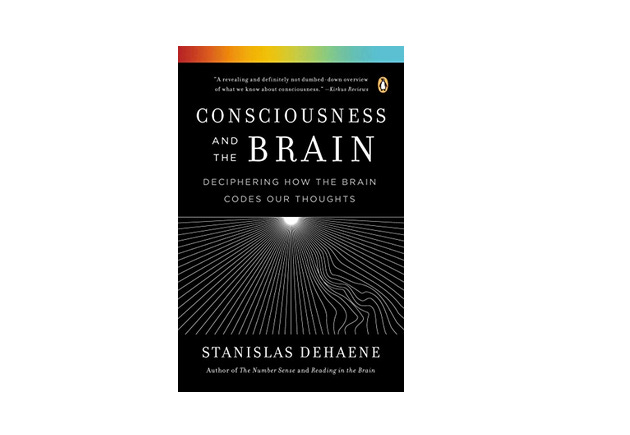
Full review: https://astralcodexten.substack.com/p/your-book-review-consciousness-and
Fully annotated: [[Your Book Review: Consciousness and the Brain(annotated)]]
#published 2025-01-18